Somewhere along the way, we began treating the percentage on a chocolate bar as a measure of how bitter it would be. The higher the number, the more challenging we expect the chocolate to taste.
But after years of growing cacao and making chocolate on our farm in Panama, I’ve learned that those numbers tell only a small part of the story.
Last Sunday, at a chocolate tasting in Prescott, Arizona, several guests discovered this for themselves.
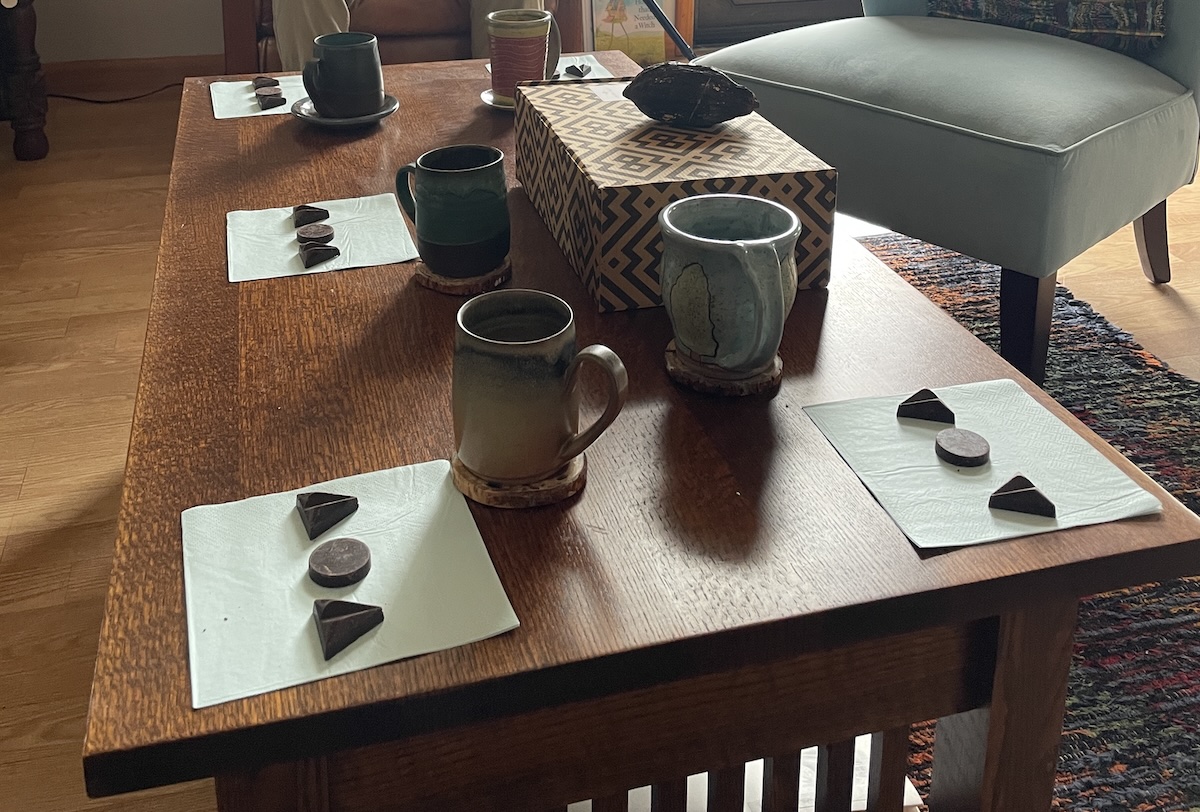
We were gathered at my friend Sharon’s home with glasses of water and pieces of Quetzal Cacao chocolate, ready to explore a vertical tasting. We began with our 90%, then moved through 82% and finished with 72%, much like tasting red wine before white.
I loved watching people’s reactions to that first piece of 90%. Many expected something harsh or bitter, but instead found it wonderfully smooth and creamy. Not sweet, of course, but full of the natural character of our estate-grown cacao.
As we moved toward the lower percentages, the growing sweetness changed our experience, giving us plenty to notice and talk about.

What do those percentages really mean?
The percentage on a chocolate bar tells us how much of its weight comes from cacao ingredients, including cocoa solids and cocoa butter.
In a plain 72% dark chocolate bar, the remaining 28% is usually sugar, while a 90% bar contains considerably less.
But here’s what makes tasting different percentages so interesting. The number doesn’t tell us how good the chocolate will taste.
A 90% chocolate doesn’t have to be harsh or unpleasantly bitter, just as a 72% isn’t automatically smooth and delicious.
Much depends on the cacao itself, how it was grown and fermented, and the decisions made by the chocolate maker.
One of the surprises at Sunday’s gathering was learning that chocolate is a fermented food.
On our farm in Panama, we harvest ripe cacao pods and carefully ferment the beans with their sweet, sticky pulp. During fermentation, I often cut open individual beans to look at the changes taking place inside them. It’s one of the ways we observe how the process is developing, long before those beans become chocolate.
After fermentation, we dry the beans, then roast, refine, and craft them into chocolate. Each stage influences the flavor and texture of the finished bar.
From harvesting the fruit to wrapping a finished chocolate bar, our process takes about a month.
When you grow your own cacao and make your own chocolate, you have the pleasure and responsibility of caring for it through every stage.
Try a vertical tasting at your own table
While shopping at Sprouts in Arizona, I noticed something I’ve also seen at Supermarket Rey back in Panama. Even the larger chocolate makers are offering dark chocolate ranging from the 70s all the way to 100%.
That means you can explore this for yourself with chocolate from your neighborhood supermarket, or better yet, from your local craft chocolate maker.
Choose three plain dark chocolate bars from the same maker, preferably from the same product line, with different cacao percentages. This helps you focus on how the balance of cacao and sweetness changes your experience, although other differences in the recipes may also influence what you taste.
Arrange a small piece of each on a napkin and pour yourself a glass of water.
Begin with the darkest chocolate, allowing it to melt slowly on your tongue before moving to the next percentage. Take your time. Notice how it feels in your mouth, the flavors that emerge, and how long they linger.
Take a sip of water between samples to refresh your palate.
As you move toward the sweeter chocolates, notice what changes. Does the bitterness soften? Do different flavors become more noticeable? Does the texture change? Which percentage gives you the most pleasure?
You may discover that the chocolate you enjoy most isn’t the one you expected.
There are no right or wrong answers, and no need to choose a winner. The pleasure is in slowing down long enough to notice what you’re tasting.

A little more than chocolate
One of the loveliest parts of our gathering was having my dad there to experience a vertical tasting and see this part of my life in Panama come alive around the table.
I love sharing what we grow and make, but I especially enjoy watching someone taste a piece of chocolate they were certain they wouldn’t like, only to discover something quite different.
It’s a lovely reminder that our tastes, like so many things in life, can surprise us when we approach them with curiosity.
Have you ever tasted a dark chocolate that surprised you? I’d love to hear what you discovered.
With warmth from our farm in Panama,
Lyn