From cacao seed to dark chocolate, the choices made along the way become part of what we eventually eat.
Earlier this week, I stood in front of a room in Boquete talking about dark chocolate and heart health.
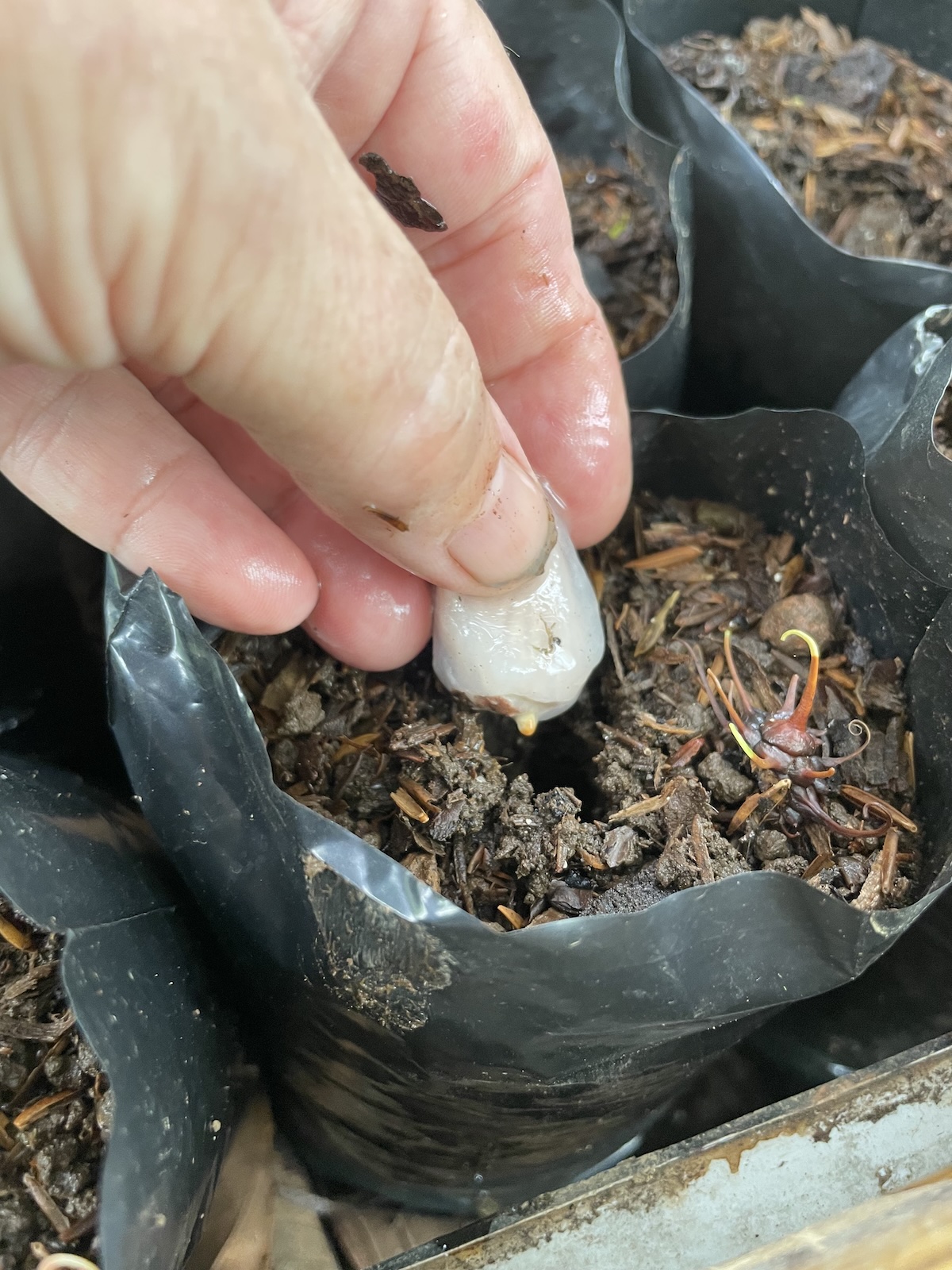
Back on the farm, we had also begun working with about 300 new cacao seeds.
They are part of an experiment with our cacao mentor to improve the way we germinate and establish young trees. This time, we are beginning some of the fresh seeds in water so we can watch for the first signs of germination before they move into the nursery.
Cacao seeds need this kind of attention. Unlike the dry seeds we keep in packets for the garden, fresh cacao seed still holds a great deal of moisture and begins losing its ability to germinate if it is allowed to dry. In nature, it is ready to begin growing quite soon after the fruit matures.
If these seedlings establish well, some may eventually become trees we harvest for many years. The choices we make now will shape the cacao we harvest and the chocolate we make years from now.
By the time cacao reaches the chocolate kitchen, years of growing and a series of decisions after harvest have already shaped it.
What cacao percentage can tell us
This was part of what I wanted to explain when we began talking about flavanols and heart health.
Flavanols, sometimes called flavan-3-ols in the research, are natural compounds found in cacao and other plants. Scientists have been particularly interested in their relationship with the endothelium, the thin lining inside our blood vessels.
Healthy endothelial function helps our blood vessels respond and widen when the body needs more blood flow.
Studies of cocoa flavanols have found improvements in endothelial function, including in healthy adults. Researchers also use a test called flow-mediated dilation to see how well an artery widens when blood flow increases, and randomized trials have found improvement there too.
For those of us who enjoy dark chocolate, there is an important detail inside that research.
The cacao percentage on the wrapper is not a measurement of flavanols.
A bar marked 72%, 85%, or 90% tells us how much of the chocolate comes from cacao ingredients. It does not tell us exactly how many flavanols survived into the chocolate we are eating.
The cacao itself matters, and fermentation, roasting, and processing influence how much of its natural flavanols remain.
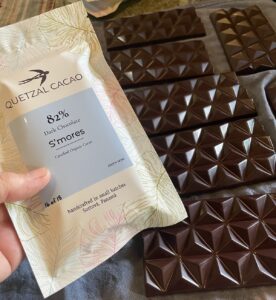
I still look at percentage because it tells me something useful. I also want to know what happened to the cacao before it became chocolate.
Here on the farm, that begins with the trees themselves. We harvest ripe pods, ferment and dry the beans, and eventually bring that cacao into the chocolate kitchen. What happens along the way affects the flavor we taste in the finished chocolate, and some of those same steps also affect the natural compounds in cacao.
Looking beyond the front of the wrapper
Living with the whole process has changed the way I look at food.
I know where the cacao in our chocolate grew. I know who harvested it. I can put my hands into a fermenting batch and feel the heat. Later, I can stand in the chocolate kitchen with the finished bar and taste what all of those decisions became.
Most of the food we eat does not give us that kind of access, of course. I do think we can become more curious about what happened before it reached us.
If dark chocolate is part of your routine, the percentage on the wrapper is a useful place to begin. Then go a little further.
Where was the cacao grown? Does the maker talk about fermentation or roasting? Can you learn anything about how they work with the beans?
None of that can tell you the exact flavanol content of a chocolate. Only testing can do that. It can tell you something about how closely the maker is paying attention to the cacao and to the stages that shape both flavor and the compounds naturally present in it.
Food choices have a long life too
Our health is shaped over a long time. Heart health is influenced by many things over many years, and food is one of the places where we make small choices again and again.
That does not require eating perfectly.
I am much more interested in choosing whole foods that are well grown, nourishing, and pleasurable enough to remain part of everyday life.
That is how dark chocolate fits into my own life.
I genuinely enjoy it. I would eat it even if nobody had ever published a study about flavanols. I am also glad to know that cacao contains compounds researchers continue to study for their role in vascular health.
Growing cacao as well as making chocolate has made the long timeline of food very visible to me.
A decision made in a nursery may still be with us decades later.
We improve soil knowing we may not see all of the results this season. We plant trees knowing they need years. We keep learning from people who have spent longer with cacao than we have.
The work is built through many small decisions made over time.
What are we choosing to carry forward?
That question becomes much larger when I look beyond our own farm.
I have been studying new research into Panama’s cacao genetics and some of the fine-flavor material growing here that is still barely understood.
As more cacao is planted around the country, I think there is an important question to ask:
Do we understand what is already growing in Panama well enough to know what deserves to be preserved?
I will be writing more about that as we continue learning what is already here and what the choices being made now may mean for Panama’s cacao in the future.
For the moment, there are about 300 fresh cacao seeds in our care.
If some of them become productive trees, the choices we are making with them now will still be present in our chocolate years from today.
If you have a favorite dark chocolate in your kitchen, go beyond the percentage on the front of the wrapper and see what you can learn about where its cacao was grown and how the chocolate was made.
And if this kind of conversation about cacao, food, land, and the life behind what we eat interests you, you are welcome to continue with me through the Hearth at lynbishop.com/hearth.